
Here you will find the latest news, updates and activities of OTIHWN. We hope you find these blogs informative and helpful, if there’s anything you would like to hear about in these please contact us through our “Get in touch” page!
Congratulations on making it to Stage 2 of the Impact Graduate Programme application process! With the deadline approaching to submit your video interviews, we have put together some top tips to support you with your applications.
- Firstly, the concept of recording yourself may seem alien to you. Don’t worry – this will be a new concept for most applicants! The best way to get around the unknown is to practise recording yourself, just so you get used to the feeling of it.
- You could practise recording an answer and listen back to how you sound, noting your pace, clarity and volume. This is a great way to ensure you are not speaking too quickly, as it is always best to speak more slowly to ensure clarity. Make sure that you don’t take longer than 2 minutes to plan your answer and to deliver it.
- A great way to prepare for the video interview is to create a question bank for common questions. This should include consistent references to the LGA’S key competencies – you can consult the 8 key competencies on the Impact page of the LGA website.
- When it comes down to recording your answers at your chosen time, you should pay attention to which competency the question is testing, and ensure it is reflected within your answer. The markers are not expecting you to be the finished article, so your answers do not need to be perfect.
- Make the most of the practice questions. There will be two questions at the start that are not sent to markers but are a useful opportunity to: check tech, practice speaking to the camera, preparing during the allotted time, and speaking for the full two minutes.
- Use the STAR framework to answer questions – Situation, Task, Action, Result. If you have enough time, you could also add a Reflection at the end. There will be 3 questions, each with 2 minutes preparation time and 2 minutes delivery time (unless reasonable adjustments have been requested).
- Your answers do not have to use corporate, business or work-related examples. The LGA and Impact are aware that most of their applicants are applying straight after graduating so their experience will be limited. Feel free to give examples of any work you’ve done or any project you’ve been involved in, this could be from your work experience, studies, volunteering or hobbies.
- Try to reach an understanding of local government, including what it is and does. At this stage, it is not expected that you’ll have a sophisticated understanding, but it will be helpful to understand a bit about the structure of local gov and the roles it carries out in communities.
Best of luck with your video interviews, and make sure to let your personality, abilities and motivation come through!
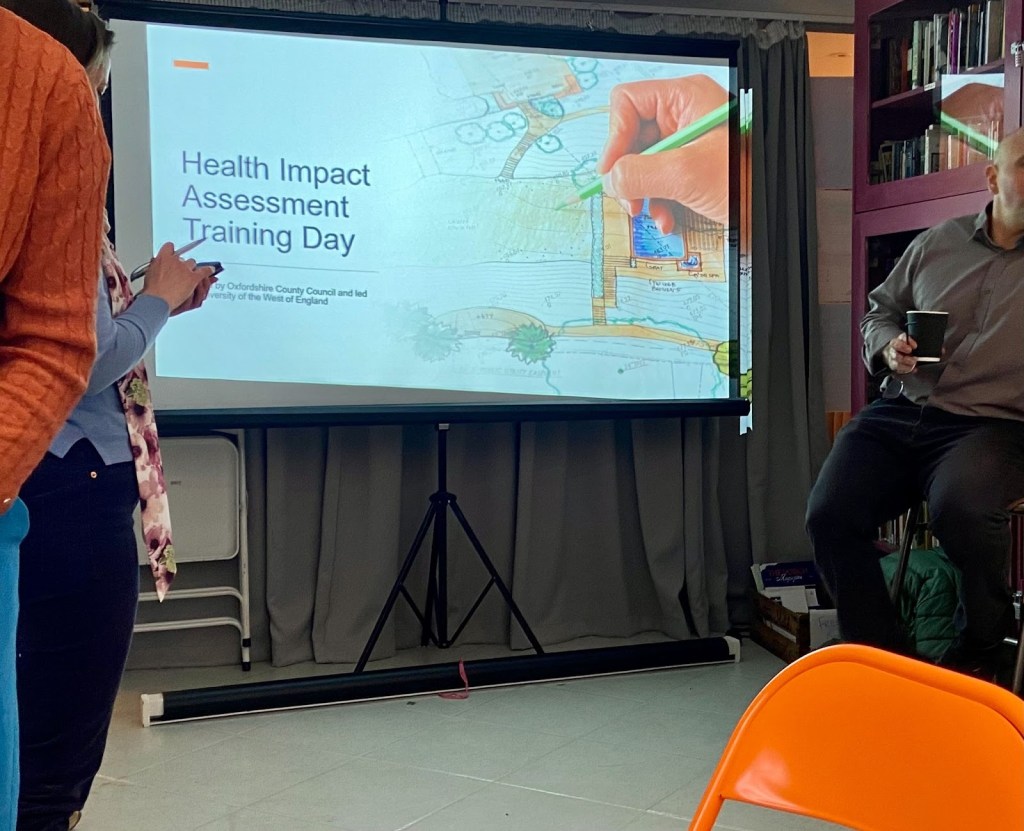
Image 1: Presentation by UWE Bristol and WHO Collaborating Centre for Healthy Urban Environments
In England there is now a 20-year gap in healthy life expectancy between the most and least deprived areas. It is well-documented that the NHS is on its knees, battered by the COVID pandemic and austerity. The NHS now spends only around 5% on preventive care. And yet, we know that health is greatly impacted by social determinants like quality of housing and access to green space. Michael Marmot argues that health is in fact shaped far more by our built environment than by our hospitals. For Marmot, the key to health equity is to place responsibility on a range of stakeholders beyond the NHS, and to generally create conditions for individuals to take control of their own lives. Oxfordshire became a Marmot place recently which means the county officially recognises that it must tackle the root causes of poor health, not just the symptoms. I believe that planning could, and should, play a greater role in this…
I recently began a career in planning at Oxford City Council. If you haven’t got a clue what planning is then don’t worry – I didn’t a year ago! The easiest explanation is that if architecture is designing for the individual, then planning is designing for a society. The premise of the planning system is that it has control over what is built and what isn’t. Marmot wasn’t the first to recognise the strong ties between public health and planning. In 1800s England, social reformers (like Edwin Chadwick) noticed the detrimental health effects of crowded, unsanitary environments in big cities, sparking efforts to improve housing and waste management across the country. Planning has historically been a tool for social and environmental change.
But what do planners do today, and why are their powers being restricted? The bottom line is that the UK has an entrenched housing crisis. The Centre for Policy Studies reports a housing gap of 6.5 million homes. And the central government intends to address this through their mandate to build 1.5 million homes by 2029. But building luxury homes won’t fix the problem for ordinary people. I’m not the first to say that a purely ‘numbers game’ will not lead to the right types of homes being built: that’s to say ones which are truly affordable and in-tune with their environmental surroundings (but that’s a story for another day). The crucial thing to understand is that the scales are now unequally weighted towards housebuilders, as opposed to planners, who are backed by the mandate to “build, baby, build”.
Now that you’re keen on planning, I’ll explain how the system works in simple terms. Two crucial planning departments are policy and development management. Policy planners write the policy for their area which developers then follow. Local Plans tend to include policies on protection of green space but can also introduce more radical policies like ensuring all new buildings are net zero carbon in operation. Development managers work on planning applications, working directly with developers and advising on whether the development meets policy requirements.
Oxfordshire Training Day on Health Impact Assessments
The other day I had the opportunity to attend training on Health Impact Assessments led by UWE Bristol and WHO Collaborating Centre for Healthy Urban Environments for local authorities and others to engage in practical exercises and to encourage debate on how processes enabling healthy places could improve. It drove home to me the benefits of Health Impact Assessments but also how much more work needs to be done in the UK’s built environment sector to fulfil the Marmot principles.
Health Impact Assessments (HIAs) are a tool for developers and planners to weigh up the positive and negative health impacts of projects/programmes/strategies on the geographical area and its residents. Ideally, developers would use successive HIAs to evaluate a new housing development and maximise the potential public health benefits through design mitigations. All councils in Oxfordshire have a policy in their Local Plan requiring developers to submit a HIA with their application. It is still fairly rare for councils to require this in England (in 2026 only 38% of local authorities have it). In Oxfordshire, development management teams have begun using HIAs as a tool for negotiating better conditions, such as greater space standards in homes. Because the developer has written the HIA themselves, it can then be used as an effective leverage by planners.
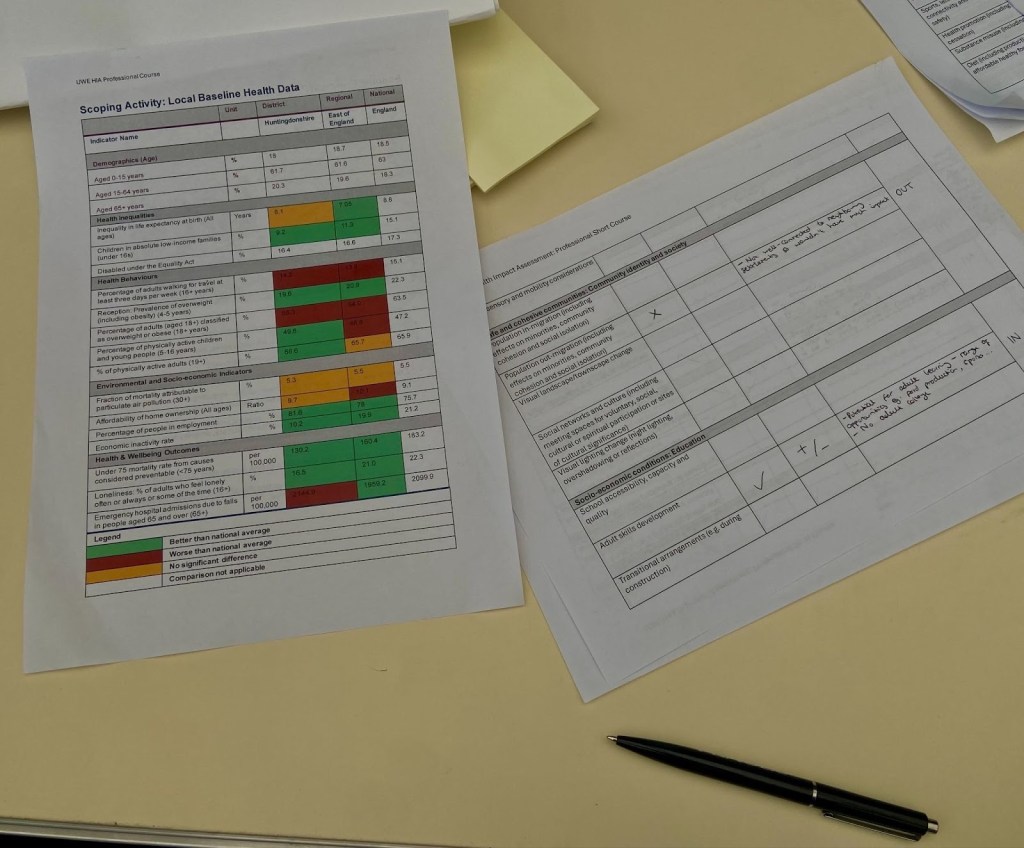
Image 2: Undertaking a practice HIA in groups using quantitative data on health and demographics
However, the debate brought up concerns from participants around the current HIA process. Development management participants highlighted reluctance from developers to perform HIAs due to cost and the amount of documents required alongside an application. With current policies only requiring HIAs to be submitted at the final stage, the HIA risks becoming a tick-box exercise which isn’t creating healthier places in reality. To embed health into all stages of development, we discussed how policy should ensure developers begin consultation on HIAs early on in the pre-application stage. Additionally, we spoke about the need for greater monitoring and evaluation across the whole sector. Without robust regulation it’s easy for developers to provide a rose-tinted HIA or to not deliver on their proposed mitigations. Only once these areas are better enforced will HIAs transform from a ‘nice to have’ to a mandatory consideration.
I left the day feeling convinced that the built environment is a crucial health intervention, but one which is being heavily underutilised.
Thank you to UWE Bristol and Thank you to UWE Bristol and WHO Collaborating Centre for Healthy Urban Environments for providing this vital free training. for providing this vital free training.
Further reading: https://www.tcpa.org.uk/a-policy-gap-at-the-heart-of-planning-reform-where-did-health-inequalities-go/

Image 3: Everyone heading home from the co-working space after a long but interesting day! ~ Izzy Passey
Her
 Oxfordshire Trainees Integrated Health & Wellbeing Network